Point your phone at a heritage marker and unlock archival photographs, historical stories, and 3D models — no app download required.
What is Kuenta?
Kuenta — "to count" and "to tell" in Papiamento — layers archival photographs, documented history, and 3D reconstruction directly onto Aruba's protected monuments. Point a phone at a printed marker and the collections held at BNA and ANA appear in context — at the place they describe, for anyone standing there.
Featured Experiences
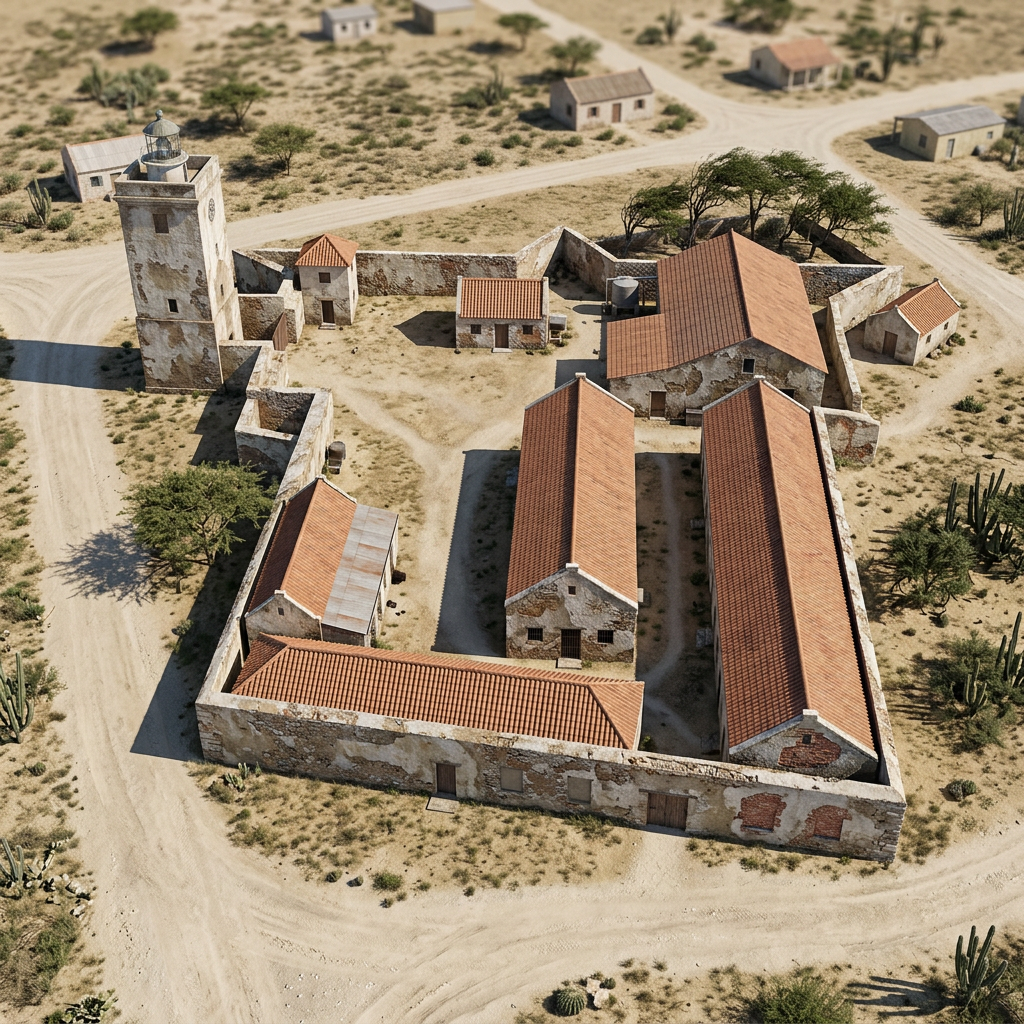
Scan a printed marker at Fort Zoutman or Alto Vista Chapel to unlock 3D reconstructions of the 1868–1937 tower phases, archival photographs with full BNA · ANA catalog attribution, and a cinematic intro drawn from the Battle of Dogger Bank record.
Open AR Guide
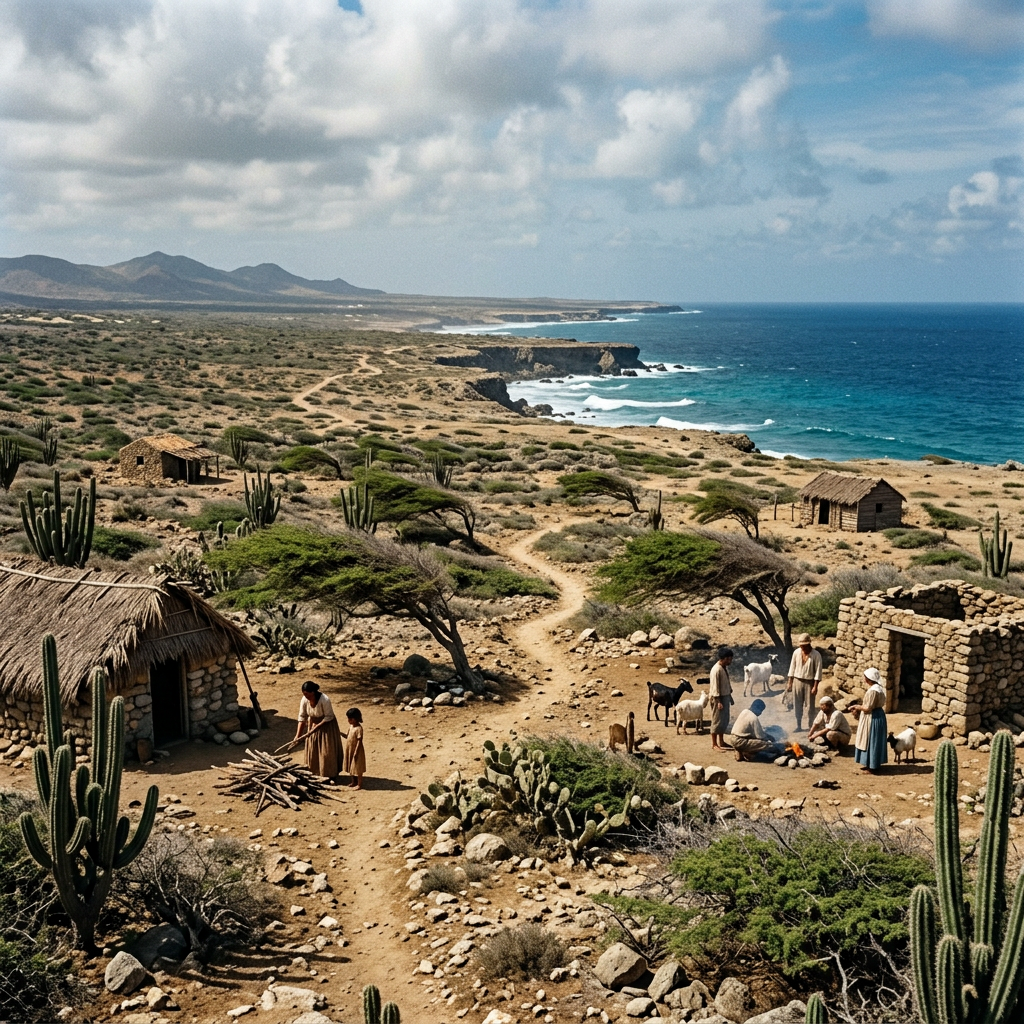
Five chapters, 1750–1952. From Domingo Antonio Silvestre's first chapel to the wartime vow of Sjon Kita — sourced from J. Hartog's Aruba, Vroeger en Nu (1961) and the archival collections of BNA and ANA.
Watch the StoryArchival collections in use
N.J. Hartog collection (CAHA-001-018), architectural drawings, Lloyd map 1815, fort photographs. Catalog numbers cited throughout.
De Graaff restoration series (COL-DEGRAAFF), Delnoij collection, BUVO administrative records. Catalog numbers cited throughout.
Fort Zoutman site photographs (CUNUCU-FORTZOUTMAN series). Presented with full institutional credit.
Five tower phases (1868–modern) and the 1798 fort, modeled from the BNA-DIG-HARTOG-CAHA-001-018-109 architectural drawings.
For visitors · No app. No install.
A visitor opens kuentaheritage.com on any Android or iOS phone in Chrome, holds the camera over a printed marker placed near the monument, and the archival record appears — photographs, history, and 3D models — overlaid on the real-world view. No account, no download, no cost.
Each image is displayed with its catalog number and source institution. Every historical claim is sourced. The collections are not extracted — they are presented in the context that gives them meaning.
Monument coverage · v1.0